There is something very special about sharing your garden with wildlife and this spring, we are lucky enough to host a pair of robins.
From dawn to dusk, they dart tirelessly across the garden, a constant, lively presence. It brings enormous satisfaction to know that, for this season at least, our garden is their world – a place they have deemed safe enough to build their nest and raise their young.
Their nest is carefully concealed within the Trachelospermum jasminoides, nestled against a west-facing timber fence and tucked behind Pittosporum ‘Green Elf’. Surrounding plants provide perfect sanctuary: a large Hebe angustifolia, clipped yew columns, espalier apple supports and mature trees beyond the boundary wall. Together, these layers create shelter, lookout points, and feeding opportunities.
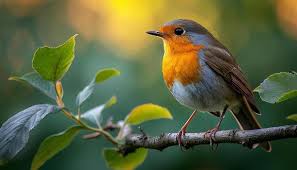
A Busy Season for Robins
We haven’t yet heard the telltale cheeping of hatchlings, but both parents are constantly foraging, which suggests the eggs have hatched. Watching them is a lesson in dedication -they spend vast amounts of time and energy gathering food.
According to the Natural History Museum, robins typically raise at least two broods each year. The female lays between four and six eggs, incubating them for around 13 days. Once hatched, the chicks fledge after about two weeks but remain dependent on their parents for a further three (nest building in February; eggs and chicks through March; fledglings in April; repeat!).
Living Alongside Nesting Birds
Hosting nesting birds comes with a sense of responsibility. We are careful to keep our distance and avoid disturbing them in any way. With wrens nesting at the far end of the garden too (shady area with dense ivy), it can sometimes feel as though our movements are rather restricted – but it’s a small price to pay.
I occasionally feel a pang of guilt for not putting out bird feeders. Instead, I’ve chosen a different approach: cultivating biodiversity. The garden is designed to offer a rich mix of planting heights, nectar, pollen, berries, seed heads, and a long flowering season. Healthy soil and an abundance of natural materials provide both food and nesting resources.
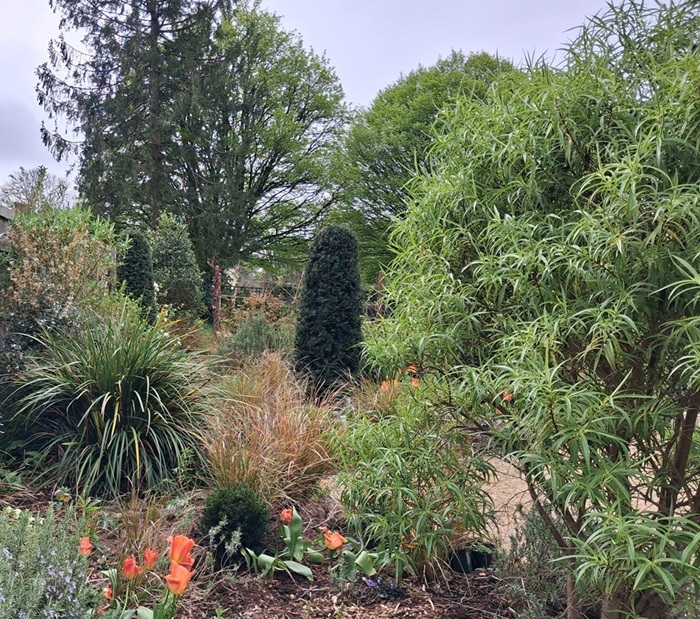
A Garden Full of Life
Robins are omnivores, and their adaptability is fascinating to observe. We’ve even seen them fly up to the kitchen windows to pluck spiders from their webs. They follow closely when I’m weeding or planting, ever hopeful for a freshly uncovered earthworm.
At this time of year, the garden teems with life – earthworms, beetles, caterpillars, larvae, moths, and midges. Like a robin, you only need to pause and look closely to appreciate the abundance.
Curious, Bold, and Surprisingly Familiar
One of the most remarkable things about robins is their boldness. They come astonishingly close, seemingly unbothered by human presence. I’ve never tried to coax one onto my hand, but I take great pleasure in simply observing them up close and listening to their gentle chatter.
It’s said that robins can recognise human faces, voices, and even patterns of movement. Over time, they learn who poses a threat -and who doesn’t. Their curiosity means they are usually keeping an eye on us when we are in the garden, Perhaps that’s why they always seem to appear just as the soil is turned, ready to seize an easy meal.
A Small World, Shared
There’s a quiet privilege in knowing that your garden plays a part in the life cycle of these birds. By creating a space rich in biodiversity, we’re not just gardening – we’re supporting a small, intricate and delicate ecosystem.